Massage Culture: How do you build a massage program your team will actually use?
Most workplace wellness programs look great on paper and quietly collect dust by February. A water dispenser in the break room isn’t a wellness strategy. Neither is a PDF about stretching that nobody opens. What actually moves the needle is something people experience directly, something that makes them feel better in their bodies within minutes of trying it. That’s exactly where chair massage earns its keep.
The answer isn’t a one-off event. It’s about weaving massage into your team’s regular rhythm, and once you do, you’ll wonder how you ever managed without it.
The Problem with Most Wellness Programs
Let’s be honest about why most wellness initiatives fail. They ask too much and deliver too little. Sign up for a gym membership on your own time. Download an app and remember to use it. Attend a seminar about stress management while you’re already stressed about the work piling up on your desk. Watch a webinar about healthy eating during your lunch break instead of, you know, actually eating lunch.
The common thread? They all require employees to do something extra, somewhere else, on their own time. They demand behavior change, sustained motivation, and personal initiative—three things that are notoriously difficult to maintain even when you’re not juggling deadlines, meetings, and the mental load of a full workday.
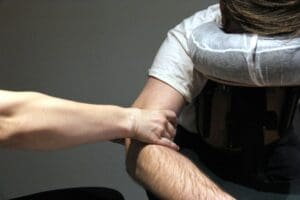
Meanwhile, chair massage shows up where your team already is. It happens during work hours. It requires zero preparation, no special clothing, no downloading, and no signing up for anything outside of maybe a time slot. Someone just sits down in a chair, and fifteen minutes later, they stand up feeling demonstrably better. There’s no activation energy required, no ongoing commitment, no guilt about not following through. Tangible relief!
Why Chair Massage Actually Gets Used
The beauty of workplace massage isn’t just that it feels good—though let’s not undersell that part. The beauty is in its elegant simplicity. There are no barriers to entry. No one has to gear themselves up for it psychologically. No one needs to find motivation after a long day. The massage therapist is already there, the chair is set up, and all your employee has to do is say yes to fifteen minutes that will make their shoulders stop screaming.
Think about the last time you had a knot in your neck or your lower back was tight from sitting all day. Did a wellness PDF help? Did knowing you should stretch more make the pain go away? Or would you have given just about anything for someone to work out that tension right then and there?
That’s the difference between theoretical wellness and experiential relief. One is something you know you should do. The other is something that immediately makes you feel human again.
What “Regular Rhythm” Really Means
When we talk about building massage into your team’s regular rhythm, we’re not suggesting some grueling schedule or complicated logistics. We’re talking about making it as routine as the Monday morning meeting or Friday afternoon wrap-up. It becomes part of what your workplace is, not an extra thing people have to think about.
Some companies do weekly visits—same day, same time, same therapist when possible. Employees start planning their week around it. “I’ve got that presentation on Tuesday, but I’ve got a massage Wednesday, so I’ll survive.” It becomes a fixed point they can count on, a guaranteed moment of relief in whatever chaos the week throws at them.
Others do bi-weekly or monthly sessions, often tied to predictable stress points. End of quarter? Schedule a massage. After a major product launch? Schedule massage. During tax season, open enrollment, annual reviews—whenever your team’s stress levels are predictably elevated, that’s when massage should show up.
The key isn’t the exact frequency. The key is consistency and predictability. When massage is a pleasant surprise, people appreciate it. When massage is a reliable constant, it changes how they experience work.
The First Session Changes Everything
Here’s what typically happens during a company’s first massage event. About half the team signs up immediately—these are your wellness enthusiasts and your people who already know they need this. The other half hangs back, skeptical or unsure or just too busy.
Then the massage starts happening. The first few people come back to their desks looking visibly relaxed, rolling their shoulders with this slightly dazed “why don’t we do this every day” expression. Someone mentions in a team chat that their headache is actually gone for the first time in three days. Another person who usually leaves work with neck pain realizes they made it through the afternoon without any discomfort.
By the second hour, the signup sheet is full. By the end of the day, you’re getting emails asking when the next session is scheduled. By the following week, you have people asking if they can extend their time slot or book appointments for colleagues who are out sick and missing it.
That’s the thing about chair massage—the experience sells itself. You don’t need to convince people it’s valuable after they’ve tried it. You just need to get them to try it once.
Creating Advocates, Not Just Participants
The most successful workplace massage programs don’t just serve employees—they create ambassadors. These are the people who rave about their session in the break room, who make sure new hires know about the massage benefit, who mention it in job interviews when candidates ask about company culture.
You’ll know you’ve built real massage culture when:
People protect their time slots. When massage day becomes something employees actively clear their calendars for, not something they’ll skip if they’re too busy, you know it’s working. If someone’s rescheduling a meeting because it conflicts with their massage appointment, that’s success.
The conversation changes. Instead of complaining about being stressed or in pain, your team starts talking about how much better they felt after their session, or what they asked their therapist to focus on this time, or how they’re going to request the same therapist next visit because they really understand their problem areas.
Leadership participates. When the CEO or department heads make time for chair massage and talk openly about valuing it, that sends a powerful message. It says this isn’t a perk for people who have extra time—it’s a priority for everyone, because everyone deserves to feel good at work.
Employees ask about expanding it. Once people experience regular massage, they start imagining more. Could we get an extra therapist so that time slots open up faster? Could we do this twice a month instead of once? Could we extend the hours so the second shift can participate, too? When your team is asking for more rather than ignoring what you’ve offered, you’ve won.
The ROI You Can’t Quite Quantify (But Everyone Feels)
Yes, there are measurable benefits to workplace massage. Reduced absenteeism. Fewer workers’ comp claims. Better productivity metrics. We could fill a spreadsheet with data points that justify the expense.
But here’s what doesn’t show up in those spreadsheets: the subtle shift in how people feel about coming to work. The executive who used to dread Monday mornings because of chronic shoulder pain, who now starts the week without that constant background discomfort. The customer service rep, who had been thinking about quitting because the stress was becoming unbearable, who now has a monthly reset that makes the job feel sustainable again.
That person who stays with your company instead of leaving? The calculation of how much that saves in recruiting, hiring, and training costs is real. But the calculation of how much it means to that person—to feel seen, valued, and cared for—that’s harder to put in a business case, even though it’s just as real.
Making It Sustainable
The secret to a massage program your team actually uses isn’t complicated: just keep showing up. Book the therapist. Reserve the space. Send the reminder email. Make it easy, make it consistent, make it normal.
Some companies worry about the cost. But when you break it down to cost per employee—especially compared to the costs of high turnover, low morale, or presenteeism (when people are physically at work but mentally checked out)—workplace massage is remarkably affordable. It’s an investment in the basic premise that people who feel better do better work. Which, when you say it out loud, seems almost too obvious to need saying.
Here’s the thing, though: knowing something intellectually and experiencing it in your body are two completely different things. Everyone knows stress is bad for you. Everyone knows tension causes problems. But knowing doesn’t make your shoulders unclench. A fifteen-minute massage does.
What This Actually Looks Like
Let’s get practical for a moment. Here’s what a successful workplace massage program might look like in real life:
Monday, 1 PM: Your massage therapist arrives, sets up in a quiet conference room, and starts seeing employees in fifteen-minute appointments. Over the next four hours, they work with sixteen people. Some of those sixteen come every single session. Some are first-timers who finally decided to try it. Some are dealing with a specific issue—a tight shoulder from a weekend project, a headache that won’t quit, stress from a difficult client meeting that morning.
Monday, 5 PM: The therapist packs up and leaves. Over the next few days, you notice things. The office feels a little calmer. There’s slightly less complaining about aches and pains. Someone who was visibly tense during last week’s all-hands meeting seems more relaxed this week. You can’t point to a single dramatic change, but the overall atmosphere has shifted, just a bit, in a positive direction.
Three Months Later: Massage isn’t a special event anymore. It’s just part of how things work. New employees get told about it during orientation. People plan their schedules around it. Someone asks in the team chat if they can book a session for a colleague as a birthday gift. When you survey employee satisfaction, multiple people mention the massage program unprompted when asked what they value most about working there.
Six Months Later: You can’t imagine not having it. The cost is budgeted just like any other essential business expense. When someone suggests cutting it to save money, half the office would probably revolt. It’s not a luxury anymore. It’s part of what makes your workplace bearable, even good, even during the hard weeks.
The Bottom Line (Literally)
Building a massage program your team will actually use isn’t about grand gestures or complicated implementation plans. It’s about recognizing a simple truth: people who hurt less and stress less are better employees, better colleagues, and frankly, better versions of themselves.
You’re not building a wellness program. You’re building a culture where physical and mental well-being aren’t afterthoughts—they’re built into the weekly routine. Where taking fifteen minutes to let someone work the tension out of your neck isn’t indulgent, it’s just what you do here.
The water dispenser will still be in the break room, and that’s fine. It serves a purpose. But when someone’s asked what the company does for employee wellness, they won’t mention the water dispenser. They’ll talk about massage Mondays, or how much they look forward to their appointment, or how they finally got relief from that shoulder pain they’d been dealing with for months.
That’s the program your team will actually use. Not because they should, but because once they try it, they genuinely don’t want to stop.
Ready to build a massage culture your team will actually use? We work with companies across the country to create sustainable, well-loved workplace massage programs. Give us a call and let’s talk about what would work for your team.