A successful workplace wellness day can either be a genuinely valued perk or a forgettable afternoon of free snacks. The difference usually comes down to planning: knowing what to include, how to time it, and how to make sure employees actually participate instead of scrolling past the calendar invite.
Why Wellness Days Are Worth the Investment

The business case is well established. Research from the American Journal of Health Promotion found that for every $1 companies spend on wellness initiatives, they can see up to $10 back through fewer medical claims, reduced absenteeism, and improved productivity. More specific to hands-on perks, a 1996 study in the International Journal of Neuroscience found that just 15-minute chair massages, given twice weekly over five weeks, lowered anxiety and improved alertness and task accuracy among employees.
In other words: a wellness day isn’t just a nice gesture. Done right, it’s a measurable investment in how your team feels and performs — and the data backs that up across multiple fronts, from medical cost savings to day-to-day focus.
There’s also a retention angle that’s easy to overlook. Employees increasingly weigh culture and perceived care from their employer when deciding whether to stay somewhere. A well-run wellness day signals that leadership sees the team as more than a production line — and that perception compounds over time, especially in competitive hiring markets where benefits like this differentiate one employer from another.
Step 1: Set a Clear Goal

Before booking anything, decide what the day is actually for. Is it:
- A one-time thank-you or morale boost?
- Part of a recurring wellness initiative?
- Tied to a specific event, like a conference or year-end milestone?
The goal shapes everything else: budget, format, and what activities make sense. A one-off morale boost, for example, can afford to be more experimental, while a recurring initiative benefits from a format that’s easy to repeat without reinventing the planning process each time. If the day is tied to a larger event like a conference, you’ll also need to coordinate timing with the broader agenda so it doesn’t compete with sessions or networking blocks.
It’s worth looping in a few stakeholders at this stage, too HR, facilities, and sometimes department leads so the goal reflects what the organization actually needs rather than just what’s easiest to execute.
Step 2: Choose Activities That Don’t Compete With Work
The biggest mistake in wellness day planning is treating it like an all-day commitment employees have to carve time out for. Full-day retreats or mandatory group activities often backfire: they add to people’s workload stress rather than relieving it, especially for employees already managing tight deadlines.
The most successful formats are drop-in style: employees can step away for 10–15 minutes and return to their desks without losing a chunk of their day. This respects the reality that most offices can’t pause entirely, even for something beneficial.
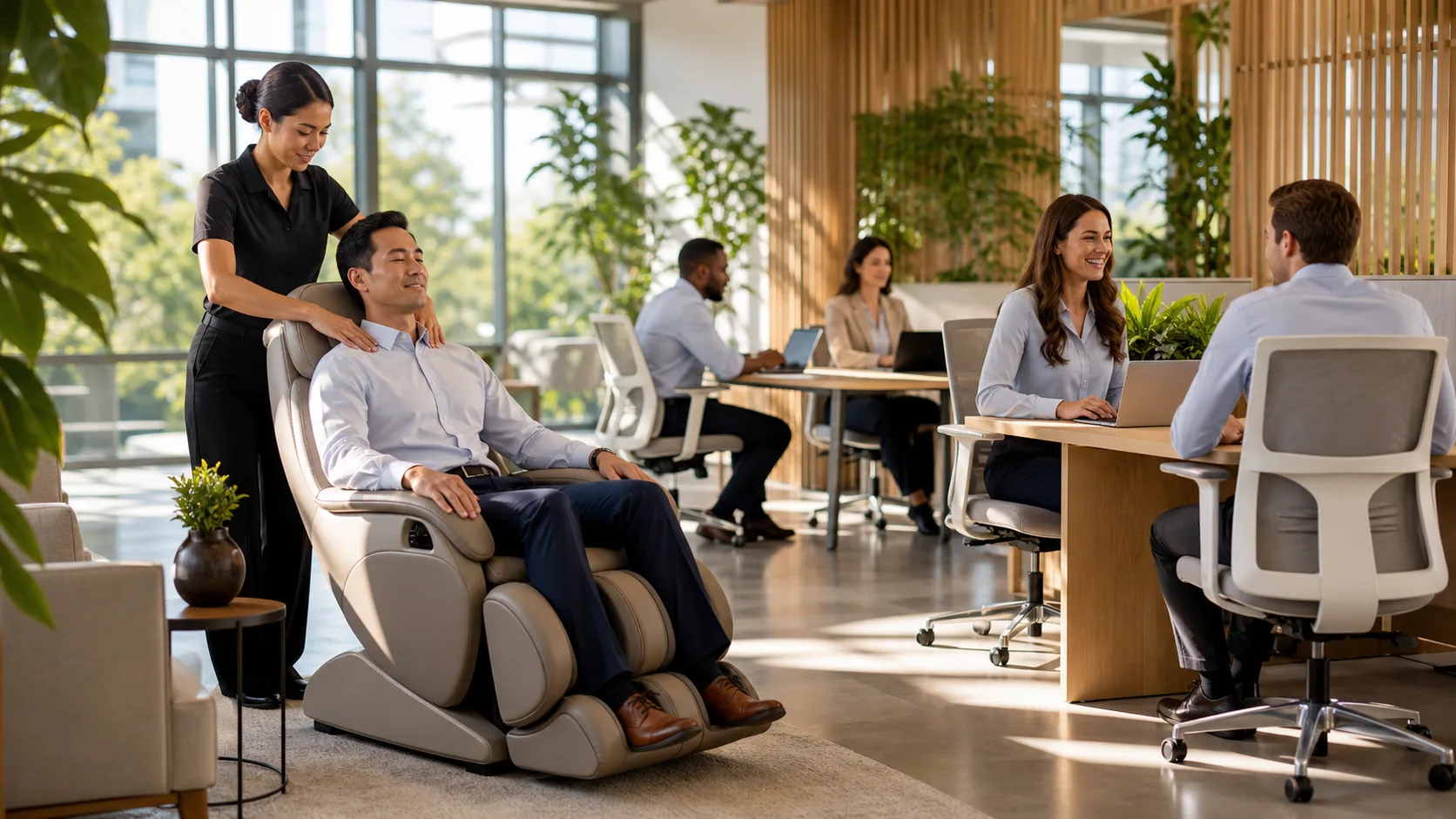
On-site chair massage is a strong fit here. Sessions typically run 10–20 minutes, require no special setup beyond a chair and a small space, and let employees participate on their own schedule throughout the day rather than during one fixed block. It also scales well a single therapist can see a dozen or more employees across a workday, making it practical even for larger teams without requiring a huge time investment from anyone.
Step 3: Time It Strategically

Wellness days land best when they coincide with periods employees actually need a reset:
- Before or after a high-stress stretch (quarter-end, product launches, conferences)
- Mid-week, when energy typically dips and the initial momentum of Monday has worn off
- Alongside an existing company event, so it doesn’t require a separate calendar commitment
Avoid scheduling wellness days during unusually busy periods where attendance will naturally be low even a great event gets skipped if everyone’s heads-down on a deadline. If your company has predictable busy seasons, build the wellness day calendar around the slower windows instead.
Step 4: Make Participation Easy
Low turnout is usually a logistics problem, not an interest problem. A few things that help:
- Send a sign-up sheet or time-slot system in advance so people don’t feel like they’re “cutting in line”
- Promote it more than once — a single calendar invite gets buried in most inboxes within a day
- Keep the signup frictionless; don’t require employees to fill out long forms to claim a 10-minute slot
- Give managers a heads-up so they don’t schedule meetings that conflict with popular time slots
It also helps to designate a visible, central location for the event rather than tucking it into an unused conference room. Visibility alone drives a surprising amount of spontaneous participation from employees who hadn’t planned to join.
Step 5: Measure What Happened

You don’t need an elaborate survey, but a short pulse-check afterward (a two-question form, or even informal feedback gathered in Slack or at the next team meeting) tells you whether to repeat the format, what the busiest time slot was, and whether people wanted more time per session. Over a few events, this feedback loop helps you fine-tune timing, format, and even vendor selection without much added effort.
Bringing It Together
A wellness day doesn’t need to be elaborate to be effective. The formats that work best are simple, low-friction, and genuinely give employees something they can’t easily get on their own during a workday, which is exactly what makes on-site chair massage such a reliable choice for this kind of event. It requires minimal setup, fits around existing schedules, and delivers a benefit employees notice immediately rather than one they have to take on faith.
At Massage by Design, we help companies build wellness days and corporate events around on-site chair massage, handling setup, scheduling, and therapists so your team gets the full benefit without the planning headache on your end.
Thinking about a wellness day for your office? Get in touch to book an event, and we’ll help you build a day your team actually looks forward to.