How Do You Budget for a Wellness Event Without Overspending? Well, it often stalls in the same place: without a clear reference point, it’s hard to know whether $500 or $5,000 is the right number. The good news is that wellness event costs are more predictable than they seem once you break them into a few concrete factors.

What Companies Are Actually Spending
Broader wellness program spending gives useful context. The average employer spent $610 per employee annually on wellness programs in 2025, down from $737 the year before, and companies save roughly $3.27 in medical costs for every $1 spent on wellness initiatives. A single event, of course, costs a fraction of a full annual program, but the underlying lesson holds: wellness spending tends to pay for itself when it’s well-targeted, even at a modest scale.
A single wellness day or event is typically a small line item compared to a full annual program, which makes it one of the lower-risk ways to start investing in employee wellbeing without committing to a long-term budget line.
Step 1: Start With Headcount, Not a Fixed Number

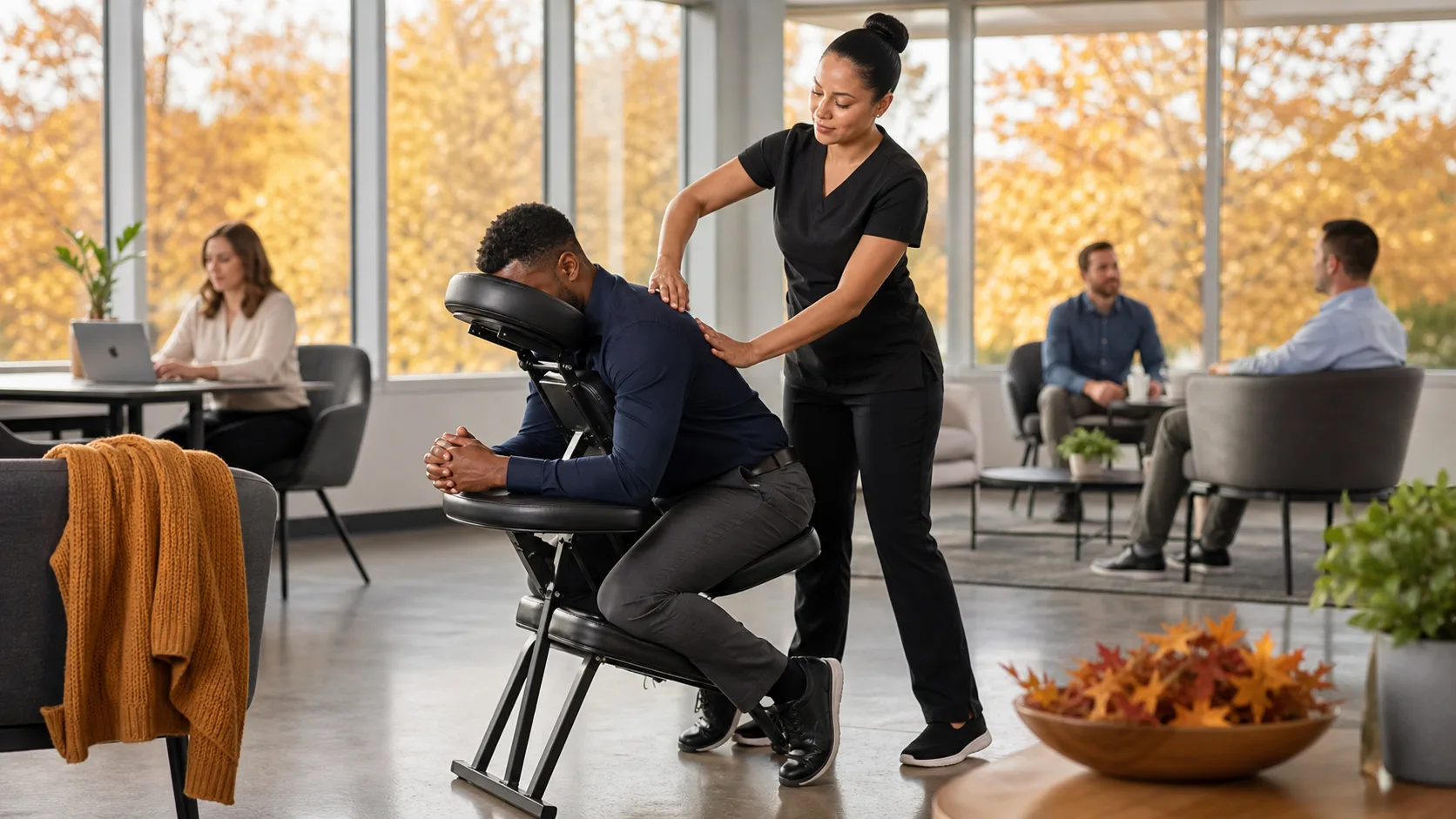
The single biggest driver of event cost is how many employees you’re planning for. Vendors offering services like on-site chair massage typically price per session or per hour of coverage, not per company, so a 20-person office and a 200-person office will land at very different numbers, even for the same type of event.
Before setting a budget, get a realistic estimate of expected participation (not total headcount; participation rate matters more). A 150-person office with 50% expected turnout needs to budget for roughly 75 people, not 150.
Step 2: Decide What “Coverage” Means for Your Event
Wellness event costs usually scale with time, not just attendees. Ask:
- How many hours will the service run?
- Will one practitioner be enough, or does the group size call for two or more working simultaneously?
- Is this a single day, or spread across multiple days for a larger office?
A half-day event with one therapist will cost meaningfully less than a full-day event with two, but it also serves fewer people. Matching coverage to realistic turnout avoids both overspending on unused capacity and underspending in a way that creates long lines and a frustrating experience.
Step 3: Separate “Must-Haves” From “Nice-to-Haves”

It’s easy for a simple wellness event to balloon in scope. Keep the core budget focused on what actually delivers the benefit — in this case, the massage service itself — before adding extras like branded signage, swag, or catering.
If budget allows, these additions can enhance the event. If budget is tight, they’re the first things to cut without affecting what employees actually came for.
Step 4: Build in a Small Buffer
Even well-planned events run into small surprises, slightly higher turnout than expected, a request to extend the event by an hour, or last-minute scheduling changes. Budgeting a 10–15% buffer on top of your core estimate avoids scrambling for extra approval mid-event.
Step 5: Compare Cost Per Engaged Employee, Not Just Total Spend

A common mistake is judging a wellness event purely by its total price tag. A $1,500 event that 80 employees actually use is a better investment than a $1,000 event only 20 people attend. When evaluating cost, think in terms of cost per person served, not just the invoice total, it gives a clearer picture of value and helps justify the spend to leadership.
Getting Approval Without Overexplaining
When presenting a wellness event budget internally, keep the case simple: tie the cost to a specific, recognizable goal (morale after a busy quarter, appreciation for a milestone, stress relief during a known crunch period) rather than framing it as a general “nice to have.” Budgets get approved faster when they’re attached to a clear reason and a realistic number, not an open-ended ask.
Bringing It Together
Budgeting for a wellness event doesn’t require guesswork once you break it down: headcount and participation rate, hours of coverage, a clear split between essentials and extras, and a small buffer for the unexpected. Getting these right means your event budget reflects what your team will actually use, not a number pulled from thin air.
At Massage by Design, we help companies scope wellness events around realistic budgets, matching coverage to headcount so you’re not overpaying for capacity you won’t use, or underbudgeting for an event that runs out of time slots halfway through the day.
Ready to get a clear quote for your next event? Get in touch to start planning, and we’ll help you build a budget that fits your office.